Wave-Jet Rc Boat
The goal of this project is to design and construct an economical remotely controlled boat capable of use in marine wave environments. A far reaching goal of this project is to build the design into a viable product for sale.
To get an idea of existing consumer RC Boats, I purchased a cheap self-righting RC boat on amazon. This boat performed very well and was a blast to use in heavy waves as seen below.
However, the lack of quality sealing quickly lead to corrosion of internal components. Also, the vessels exposed rear propellor has broken on multiple occasions when waves washed the vessel onto the beach. This demonstrated the inadequacy of consumer RC vessels for use in rough salt-water environments.
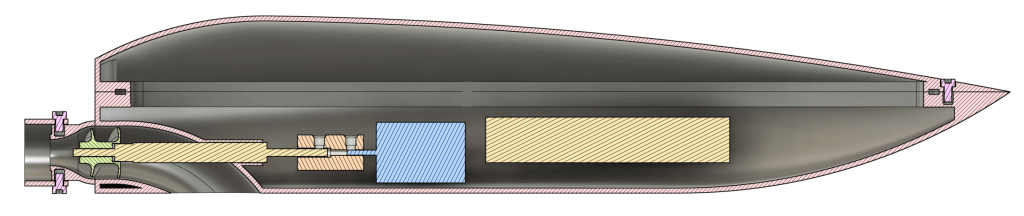
To solve these issues, the Wave-Jet RC boat uses internal water jet propulsion to protect the propellor, corrosion resistant metals, bolted o-ring sealed connections, and marine-grade grease to keep internals dry.
The plan to manufacture Wave-Jet was to use a carbon-PETG 3D printed hull to allow for rapid manufacturing and an intricate hull-form. The durability of this hull will be tested, and if required a carbon-fibre skin may be used. The hull is required to have a fully enclosed upper “super structure” in order to self-right if flipped.
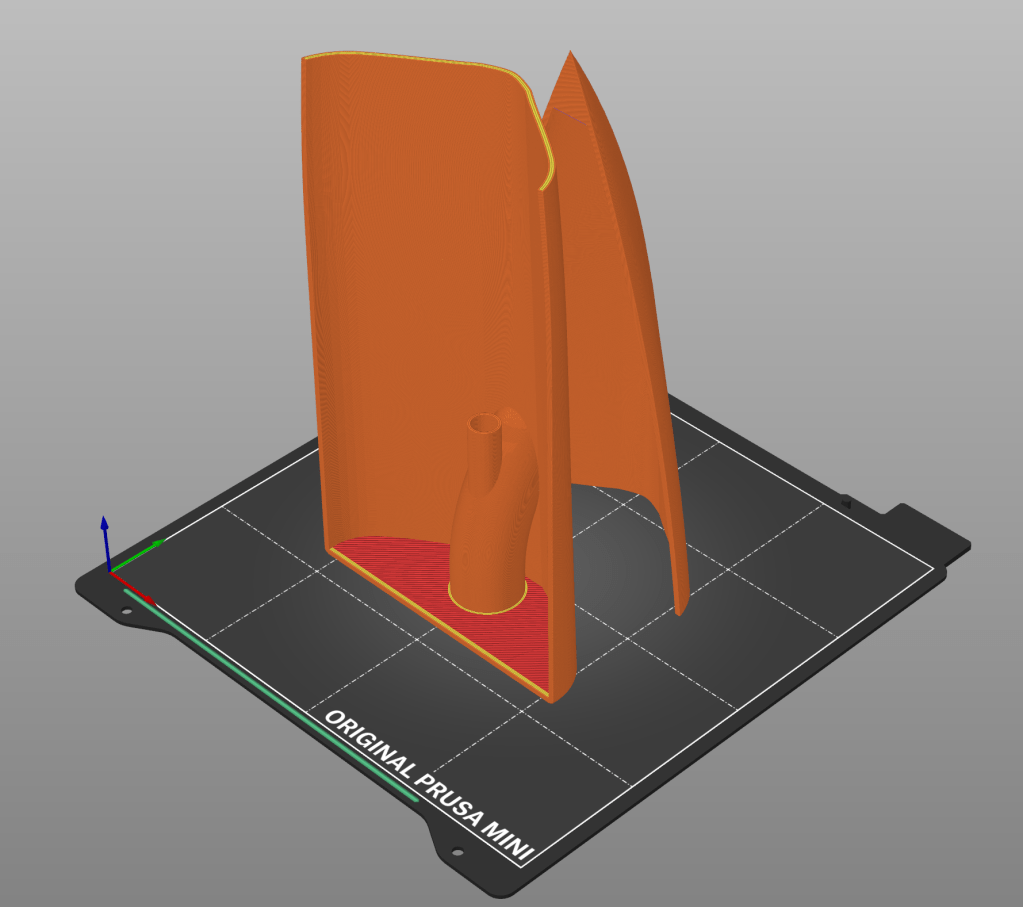
Components were sourced wholesale through Ali-express to keep costs low. Electronics compose of a simple 2S RC system consisting of a 2S battery, receiver, ESC, 4800KV brushless motor, and a servo for steering. Mechanical components include a shaft, shaft connector, steering rod, heat-set inserts, and o-ring cord stock for sealing. The first model of Wave-Jet is seen below.
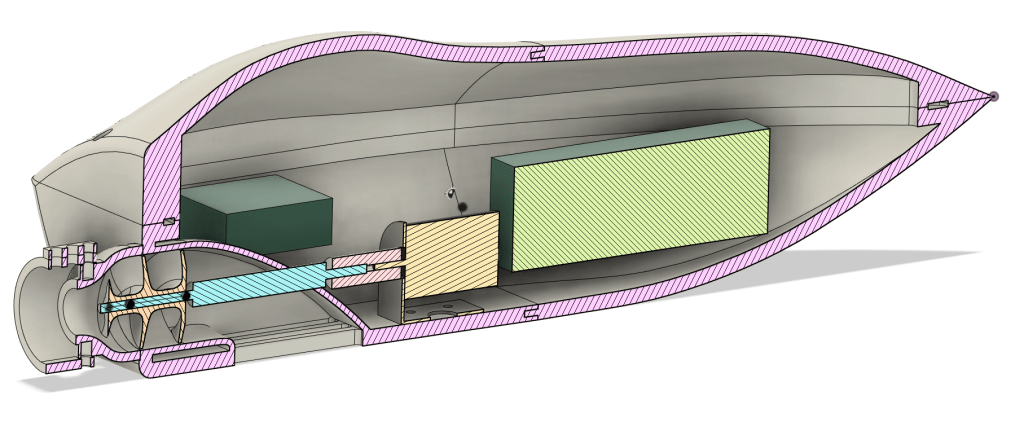
Through stability analysis, this model was found to be unstable due to a negative meta-centric height. The reason for in-stability was due to an excessively heavy hull, that out-weighed the lowly placed electronics.
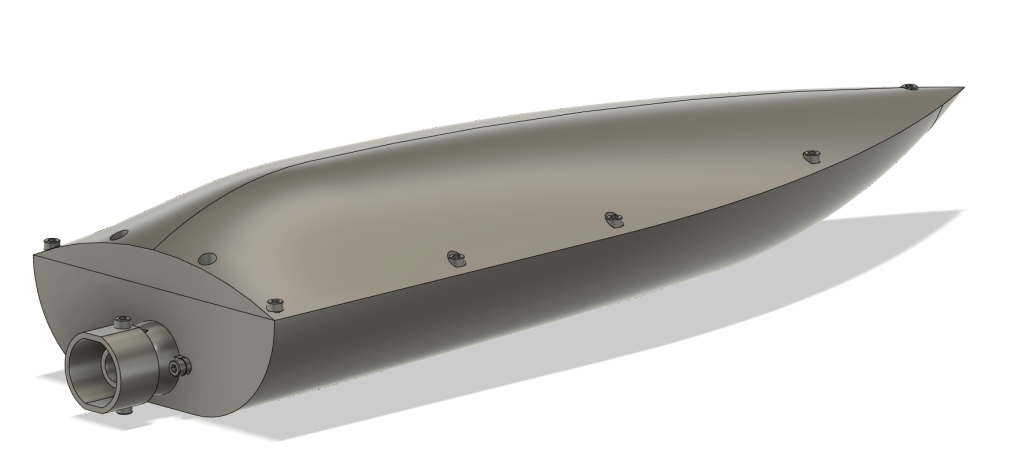
Further design, analysis, and research lead to a lighter hull based on planning hull geometry.
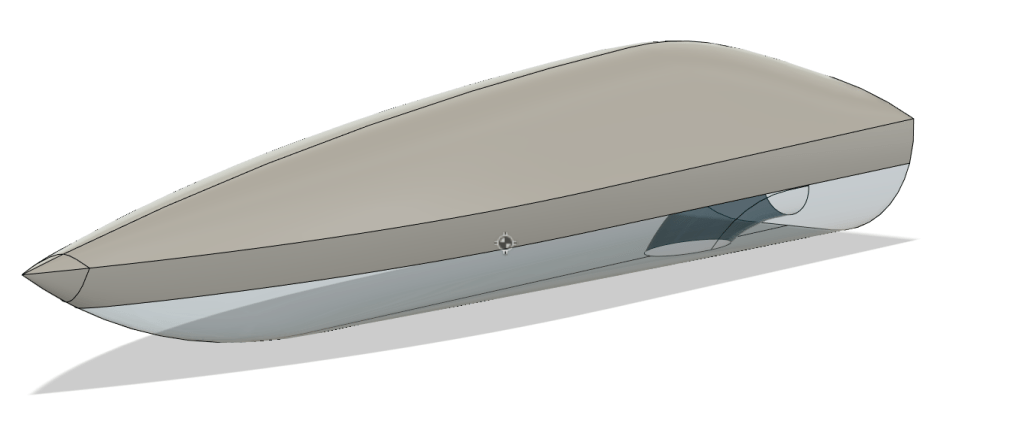
This hull was found to be stable with a metacentric heigh of 36mm, and a negative flipped metacentric height, meaning the vessel will self right if inverted.
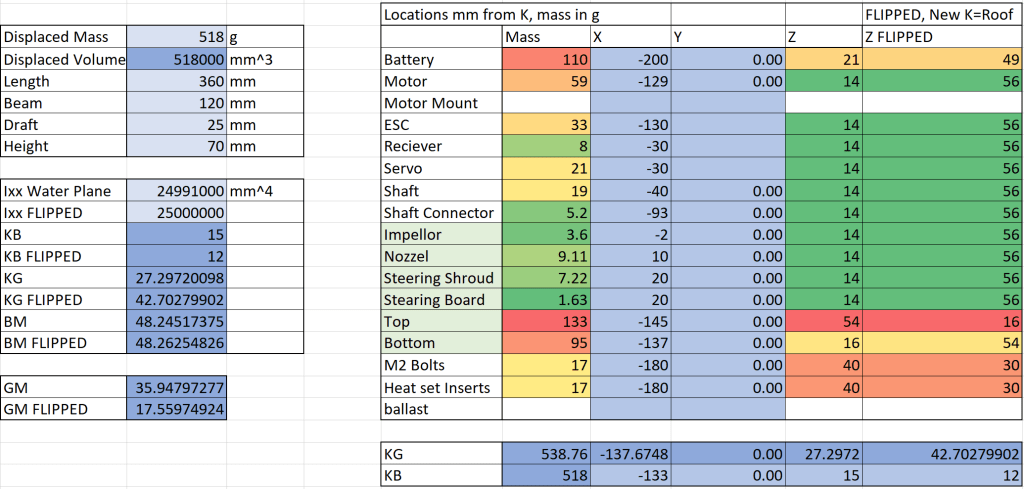
With electronics sourced and tested, and the hull form passing calculations, the next step is to begin manufacturing. Once constructed, tests to optimize Wave-Jets nozzle and impeller geometry will be completed.
 Colm's World