Buoy Survivability
For Mech 446, an Ocean Engineering Technical Elective, I completed a mooring survivability study using ProteusDS simulation and MATLAB analysis.
Inspired by a previous co-op in the remote First Nation’s village of Hot Springs Cove, the buoy was selected for deployment near the cove. This buoy could provide important wave data for residents that rely on boat travel and also potentially identify a renewable wave energy location that could provide power to the village.
Using the Marine Energy Atlas, significant wave height and peak period data were gathered.
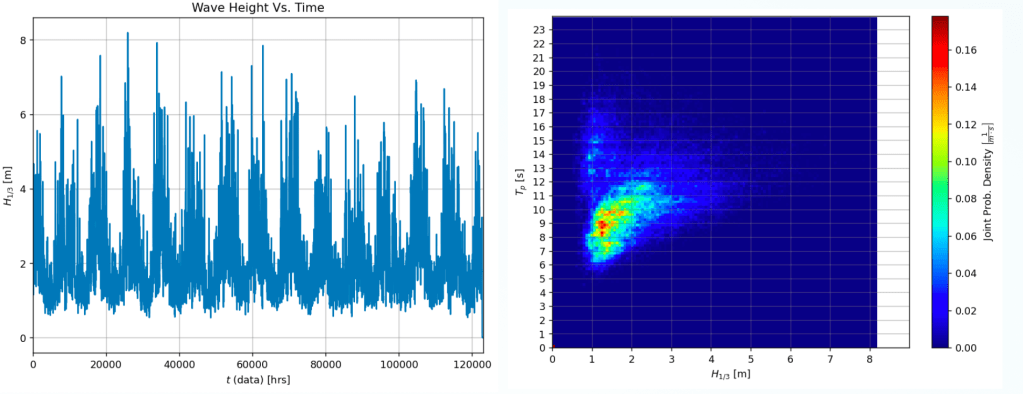
Using a joint probability density map of peak periods vs significant wave height, and the Beaufort sea state scale, typical summer and winter conditions were determined.
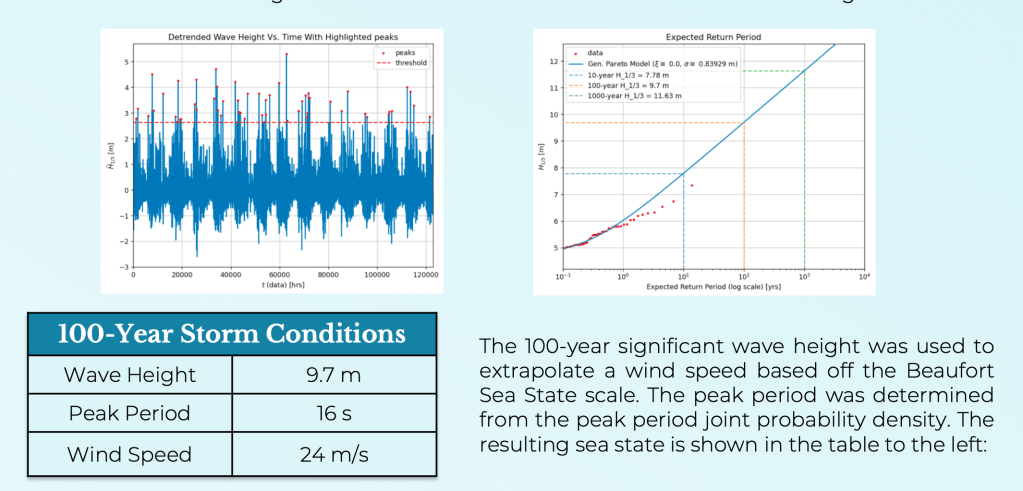
With this data, extreme value theories were used in a peaks-over-threshold approach to determine the sea state of a 100-year level storm.
With sea states determined, the mooring was simulated in ProteusDS. First, an equilibrium state was found using low element counts and rough time steps. Following this, the 100-year storm was simulated with high elements and short time steps.
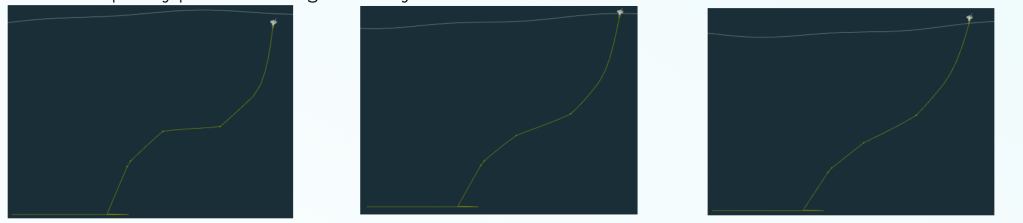
The dynamics of the buoy during maximum recorded tension are seen below.
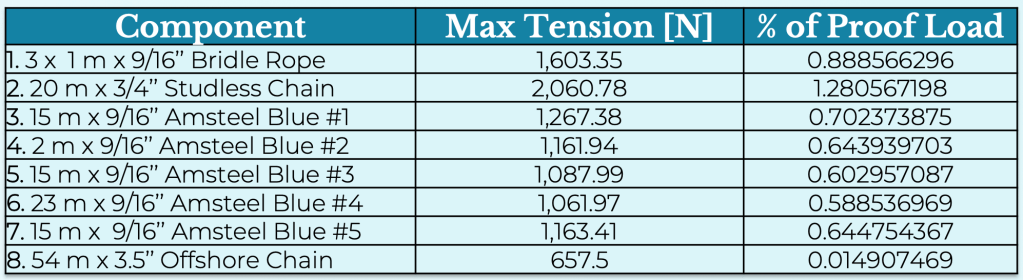
Following simulation, the max tension on each mooring element was analyzed and a stress safety factor determined.
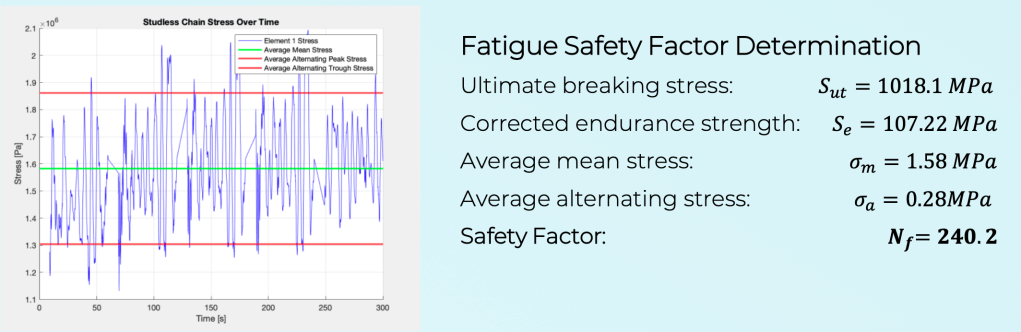
Due to the oscillatory nature of these stresses, a fatigue analysis was also conducted.
For more specific information on this study and results, see the full poster developed below!
 Colm's World